
Most programs don’t make that distinction. WeightDoctor does — and it changes everything about your long-term results.
Weight loss medication is effective at driving fat loss. It also drives significant muscle loss — and most programs don’t monitor or address this at all.
Why does it matter? Muscle is your metabolic engine. It determines your resting metabolic rate — how many calories your body burns at rest. Lose muscle during weight loss, and you slow your metabolism. Slow your metabolism, and weight regain becomes almost inevitable when treatment ends.
Most patients on weight loss programs are losing both fat and muscle without knowing it. The scale goes down. The body composition picture is more complicated.
Doctors providing you with effective solutions

Build a Platform for your weight loss
No program is the same.
We use a body composition scanner — not just a scale. Fat mass and lean muscle mass are measured separately at key points throughout your program. This tells us what’s actually happening inside the weight loss, not just the number moving downward.
Pre-assessment intake form exists in Jane App — no build required.
Resistance training signals the body to preserve lean tissue during weight loss. Our counsellors work with you on a resistance framework adapted to your starting point — whether that’s a full gym program or resistance bands at home.
How quickly weight loss medication is increased affects muscle loss. Rapid titration drives faster fat loss — and faster muscle loss alongside it. We use titration pace deliberately, balancing the speed of results against the importance of protecting lean tissue.
For patients who need additional support rebuilding or maintaining lean muscle mass, we offer muscle-stimulation technology — a clinical tool for directly stimulating muscle contractions to support strength and lean tissue preservation.
The majority of people who lose weight regain it within two years. The primary reason is metabolic adaptation — the body’s resting metabolic rate has dropped, often because muscle was lost during treatment.
Protecting muscle during weight loss isn’t a cosmetic concern. It’s the clinical foundation of long-term success. A body that ends treatment with its lean mass intact burns more calories at rest, responds better to maintenance protocols, and is significantly more likely to hold its results.
Hormonal changes accelerate muscle loss during this life stage. Weight loss medication compounds an already-active process. Protecting lean mass here requires more active intervention.
Men typically have higher lean mass to begin with — and more to lose. Visceral fat reduction is the primary goal, but protecting the muscle underneath it is equally important for metabolic health.
The more weight being lost, the greater the risk of lean mass loss alongside it. Monitoring is more important, not less, in high-volume weight loss.
Patients who aren’t currently active start with less muscle reserve. The resistance framework and muscle-stimulation technology are most valuable here.
Body composition data tells us what’s there. Functional strength testing tells us what’s working. At your assessment and at weeks 6 and 12, we run a short battery of validated clinical tests — the same tools used in physician offices and research settings.
Squeeze strength is one of the strongest predictors of lean mass and long-term metabolic health. We measure both hands and track change across the program. A dropping grip score mid-program is an early warning sign we can act on.
How many times you can stand from a chair in 30 seconds is a direct measure of lower body strength and functional capacity. It improves with muscle preservation and declines with muscle loss — and patients find it one of the most motivating metrics to watch move.
Stand, walk 3 metres, turn, return, sit. We time it. It measures mobility, balance, and functional independence — and it takes 90 seconds to administer.
Measures proprioception and stability, both of which respond to resistance training and decline with muscle loss.
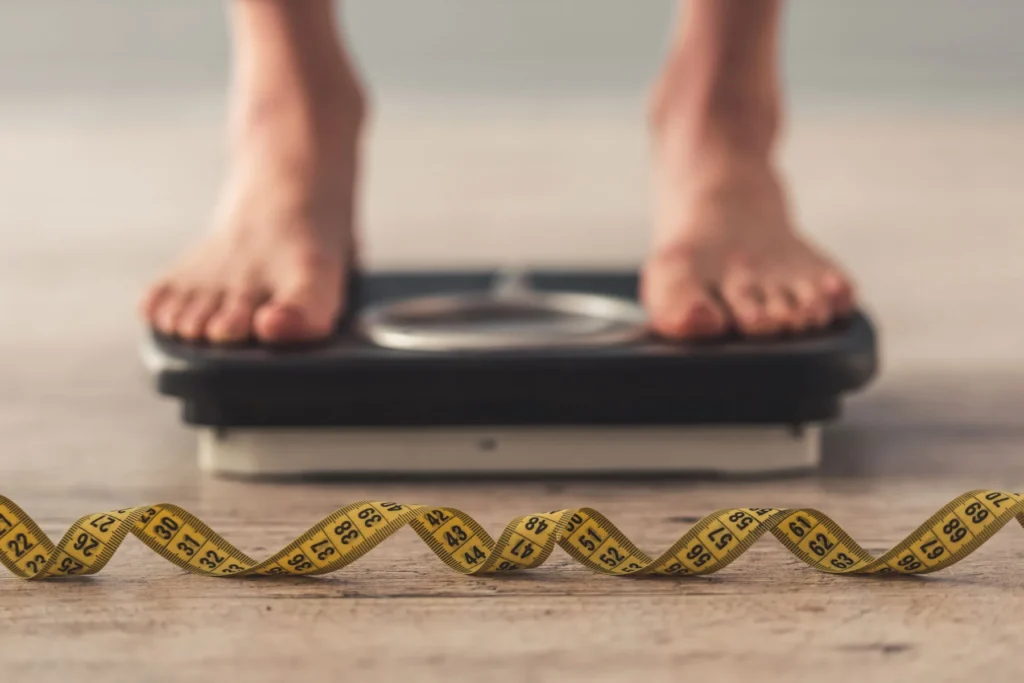
A tape measure tells us more than a scale. Waist circumference tracks visceral fat reduction directly. Arm and thigh measurements detect muscle loss in the limbs — a signal the scale misses entirely.
Together these tests take about 15 minutes and produce a clinical picture no scale can replicate.

Our Protocols are overseen by our experienced team of fitness and health professionals. As you build muscle and reduce fat, your hormone levels, body fat composition and nutritional needs will change. These changes will need to monitored – your Protocol will need to be adjusted so that you continue to experience growth and success while operating at optimal levels. During the Protocol we will continue to assess your progress by using specific metrics, and special health technology that will show precisely what is going on inside your body and help us tailor our response to keep you healthy and ensure you achieve your desired results.
Your body is different. Your hormone production, the way it absorbs and reacts to different nutrients. How you metabolize foods and what percentage of natural lean muscle mass you already carry are just some of the factors that we take into account when building your protocol.
Any program can hand you a scale. WeightDoctor tracks what’s actually happening inside the weight loss — and builds a clinical plan around protecting what matters.